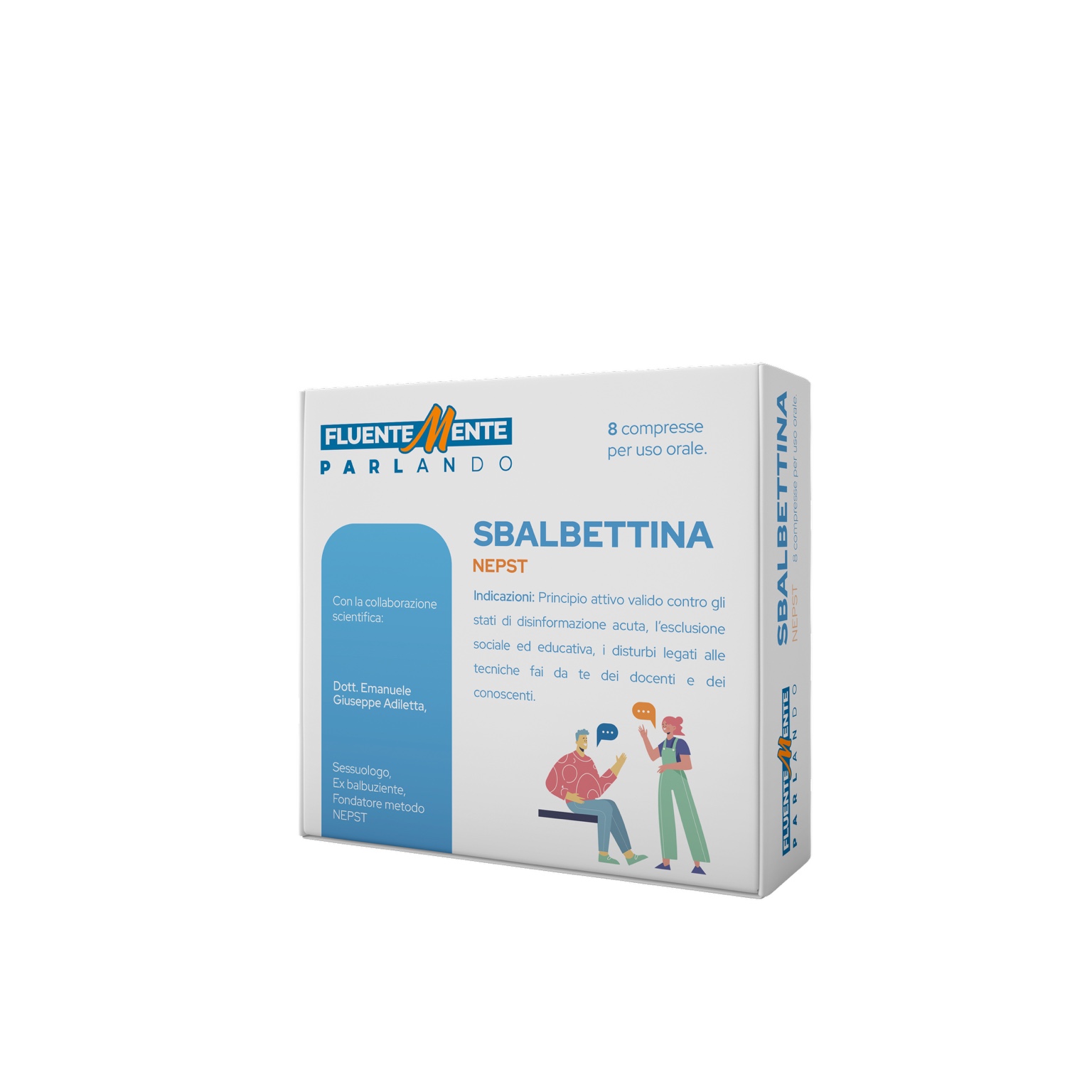
PDF · A4 landscape
Printable box
A new template to cut out, fold and assemble. To hold your information pills.
Download the PDF
SBALBETTINA · NEPST
An idea from FluenteMente Parlando for talking about stuttering, listening and inclusion in an accessible way.
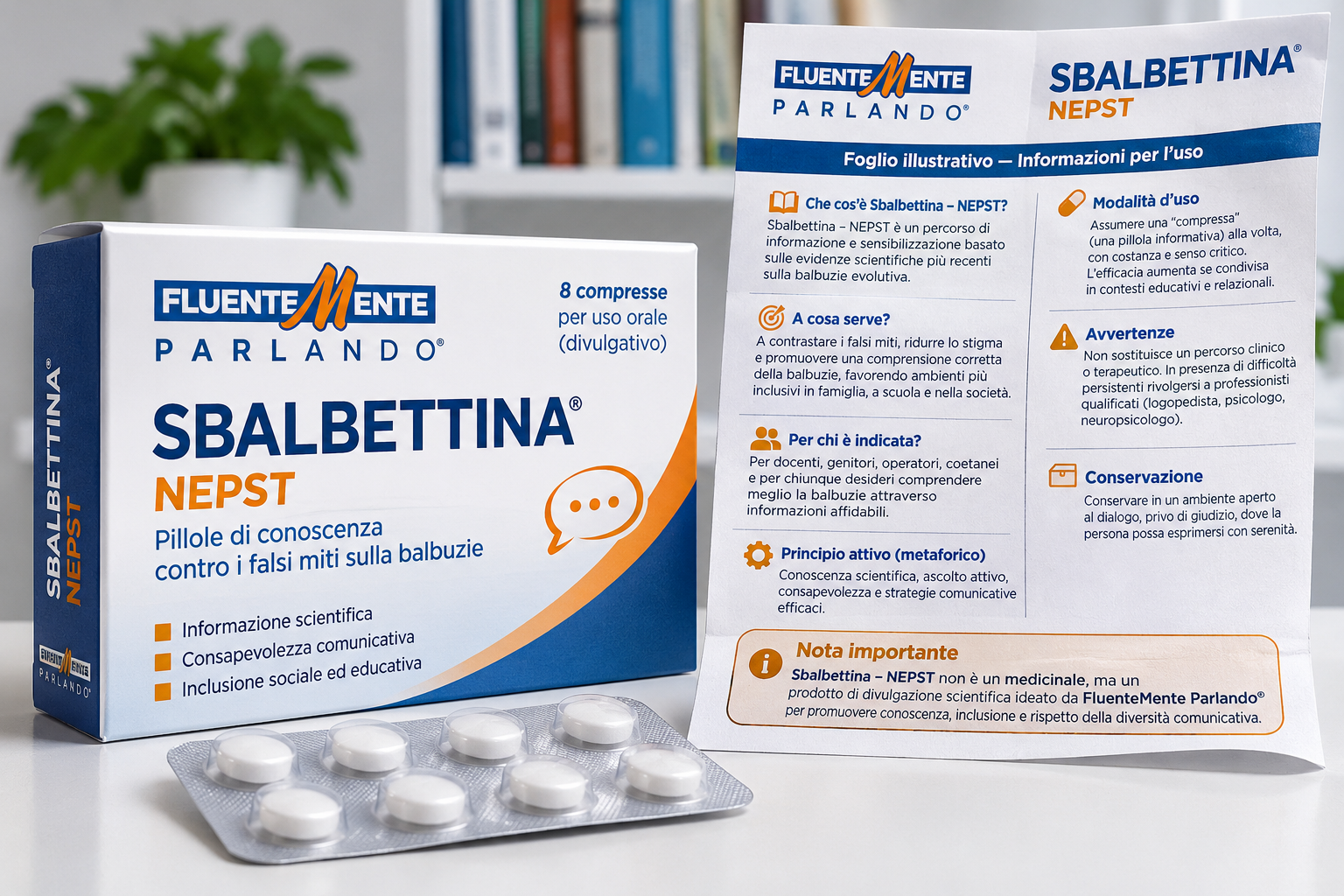
THE ACTIVE INGREDIENT IS A METAPHOR
The packaging resembles a medicine box to turn a question around: what if the misconceptions surrounding stuttering also needed to change?
Sbalbettina is an educational resource, not a medicine. The “pills” are information to read and share. It contains and recommends no substances to take.
Go to the downloadsTHE KIT TO TAKE WITH YOU
At home, at school,
at an awareness-raising event.
PDF · A4 landscape
A new template to cut out, fold and assemble. To hold your information pills.
Download the PDFPDF · 2 pages
Eight misconceptions, eight explanations. What Sbalbettina means and how to use it to start a conversation.
Download the PDFPDF · 2 pages
Practical guidance for parents, friends and relatives, with examples of conversations.
Download the PDFWould you also like the original box image?
Download the uploaded image · JPG ↓The template is a new printable version of the project. The original image documents the design concept; the PDFs contain readable educational text and instructions for use.
EIGHT IDEAS TO RETHINK
Stuttering is not a measure of intelligence. The time it takes to say a sentence tells you nothing about how much a person knows, thinks or understands.
Developmental stuttering involves several factors. Anxiety and tension may accompany it, but they do not explain its origins on their own.
Blaming the family does not explain stuttering. Parents can become partners in communication and the assessment process.
Stuttering is not contagious. Listening to someone who stutters does not mean you will develop it.
Advice given during a block can increase pressure. It is more helpful to make room for the message and agree on any strategies with the person and the professional.
Completing someone's words can take away their turn to speak. Let the person ask you for help if they want it.
Hesitations and repetitions can occur in anyone's speech. If there is a concern, an assessment considers the type of disfluency, effort, history and impact.
Age, goals and personal experiences require individual attention. Change should be evaluated over time; no universal promise can replace this work.
PARENTS · FRIENDS · RELATIVES
PARENTS
Make time for your child to speak, with unhurried turns. If your child brings it up, welcome the question without downplaying it. If you are concerned, talk to a paediatrician and a speech and language therapist: there is no need to wait until the distress becomes significant.
“I'm listening. What you want to tell me matters.”
FRIENDS
Listen naturally. Avoid imitating or joking about their speech. Ask directly what support they would appreciate, without speaking for the other person or deciding which situations they should avoid.
“When speaking takes effort, is there anything you would like me to do?”
RELATIVES
At meals and gatherings, encourage turn-taking without interruptions. Avoid comparisons with other children or comments about “good days”. Follow the agreements made by the person, their family and the professionals involved.
“Let's wait: they were finishing telling us something.”
General educational guidance for everyday communication. Clinical guidance should be agreed as part of an individual programme.
HOW TO USE THE KIT
Content checked on 28 November 2026. The sources inform the educational content; they do not certify the NEPST programme.
THE FIRST STEP IS A CONVERSATION
Tell us what you are looking for. Let's start with you, your questions and your goals.
Request an initial consultation