Zimmermann, G. N., Smith, A., & Hanley, J. M. (1981). Stuttering: In need of a unifying conceptual framework.
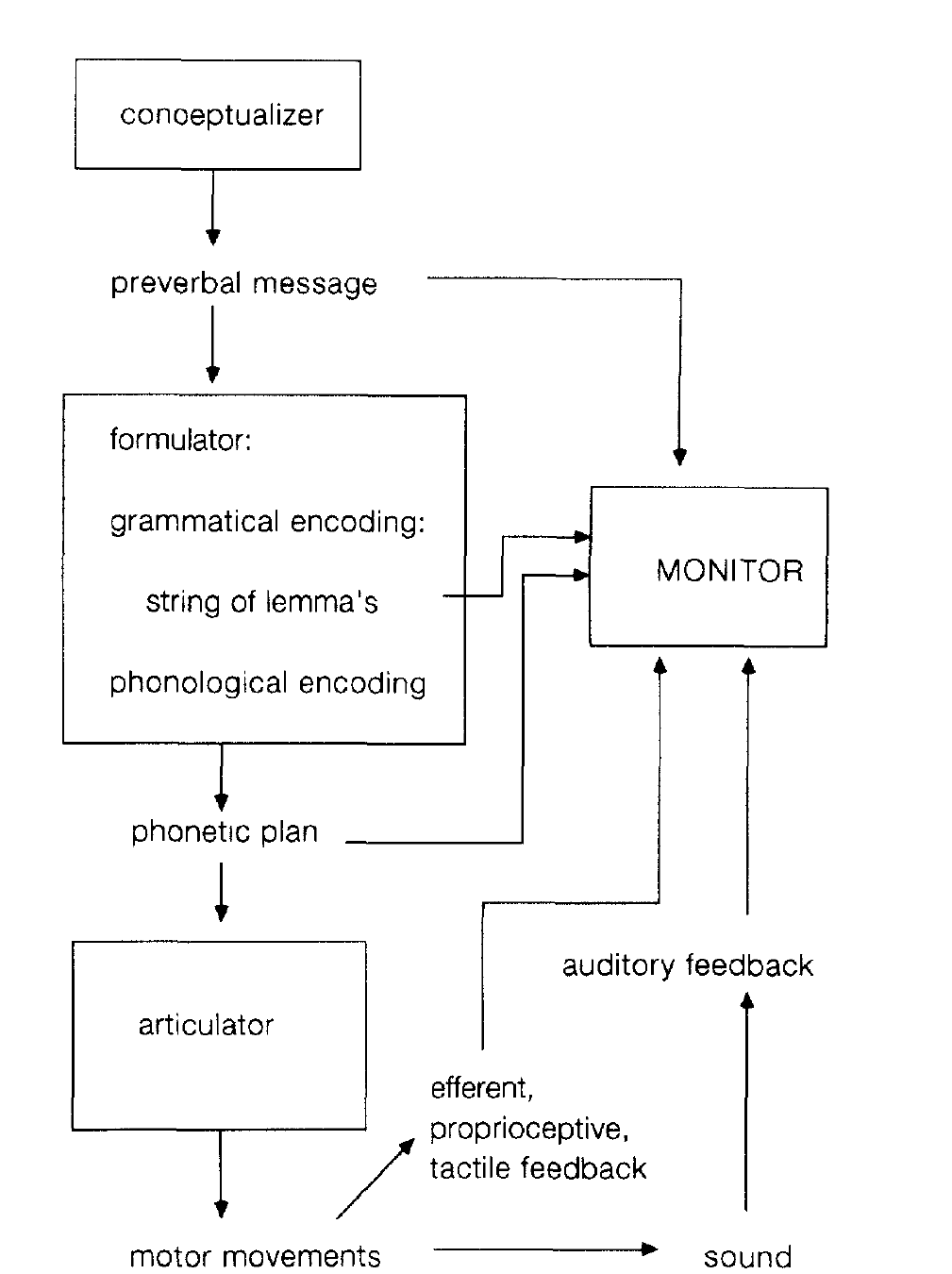
Ouvrir la publicationDOI: 10.1044/jshr.2401.25Postma, A., & Kolk, H. (1993). The Covert Repair Hypothesis: Prearticulatory Repair Processes in Normal and Stuttered Disfluencies.
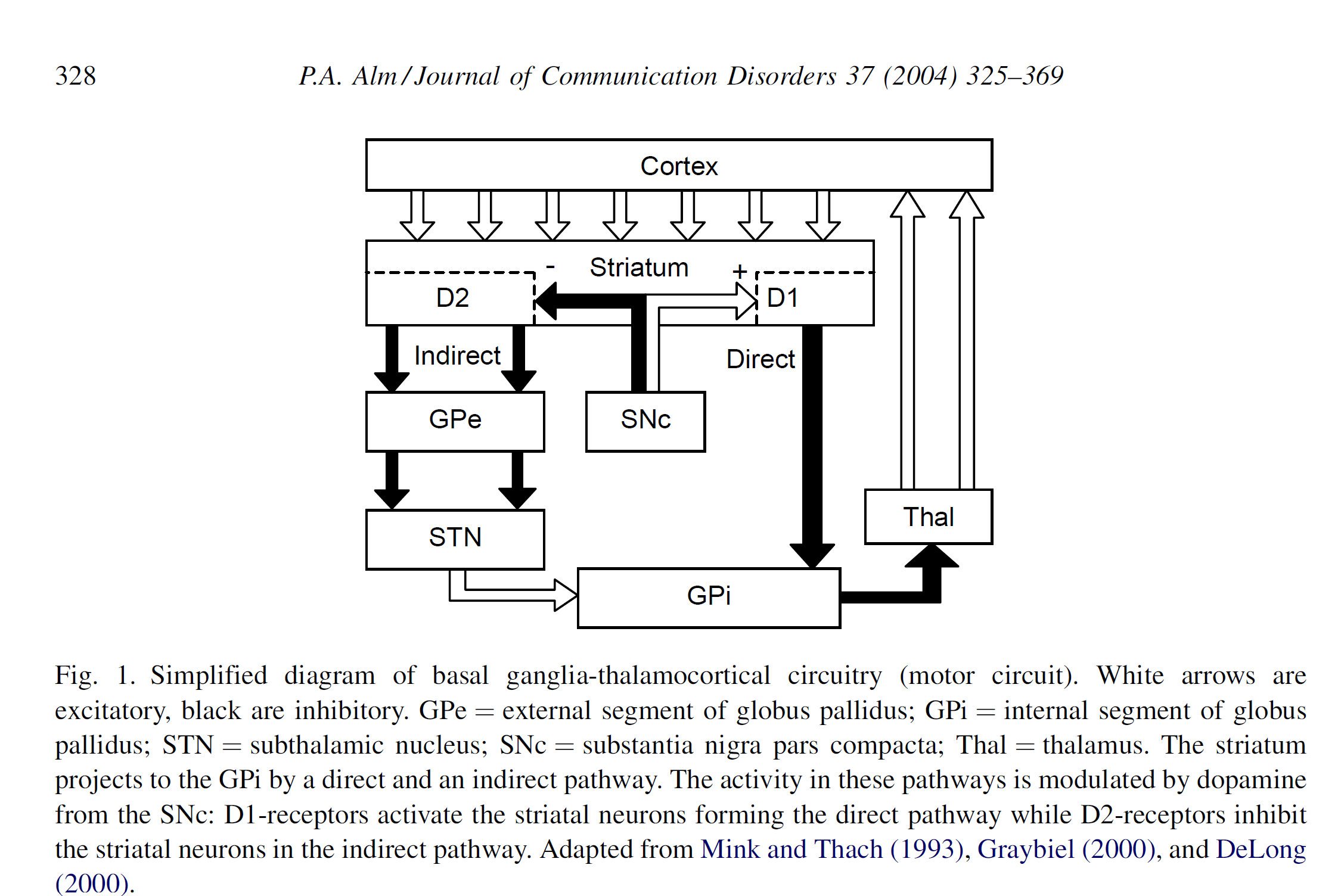
Ouvrir la publicationDOI: 10.1044/jshr.3603.472Alm, P. A. (2004). Stuttering and the basal ganglia circuits: A critical review of possible relations.
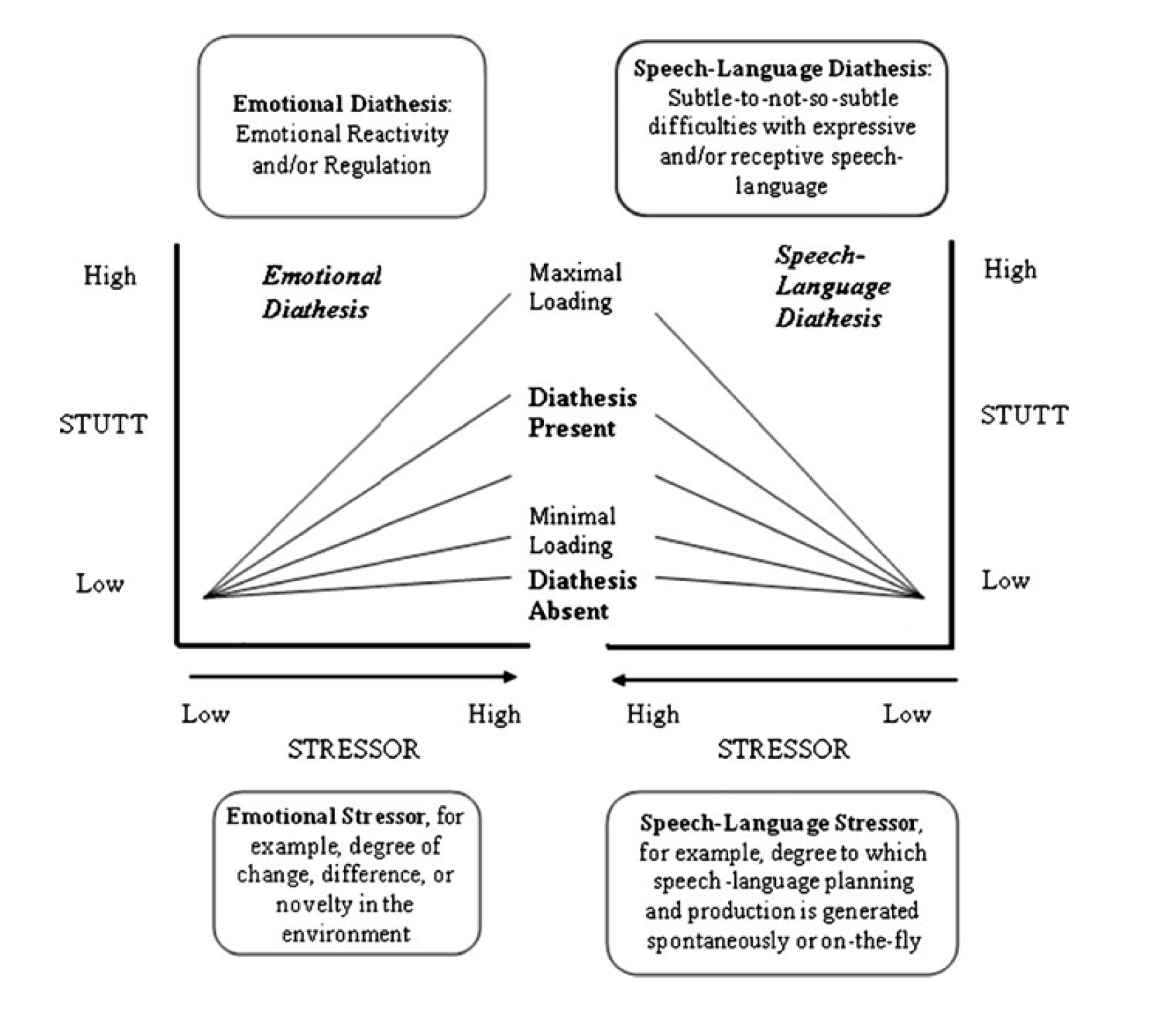
Ouvrir la publicationDOI: 10.1016/j.jcomdis.2004.03.001Walden, T. A., et al. (2012). Dual Diathesis–Stressor Model of Emotional and Linguistic Contributions to Developmental Stuttering.
Ouvrir la publicationDOI: 10.1007/s10802-011-9581-8Packman, A. (2012). Theory and therapy in stuttering: A complex relationship.
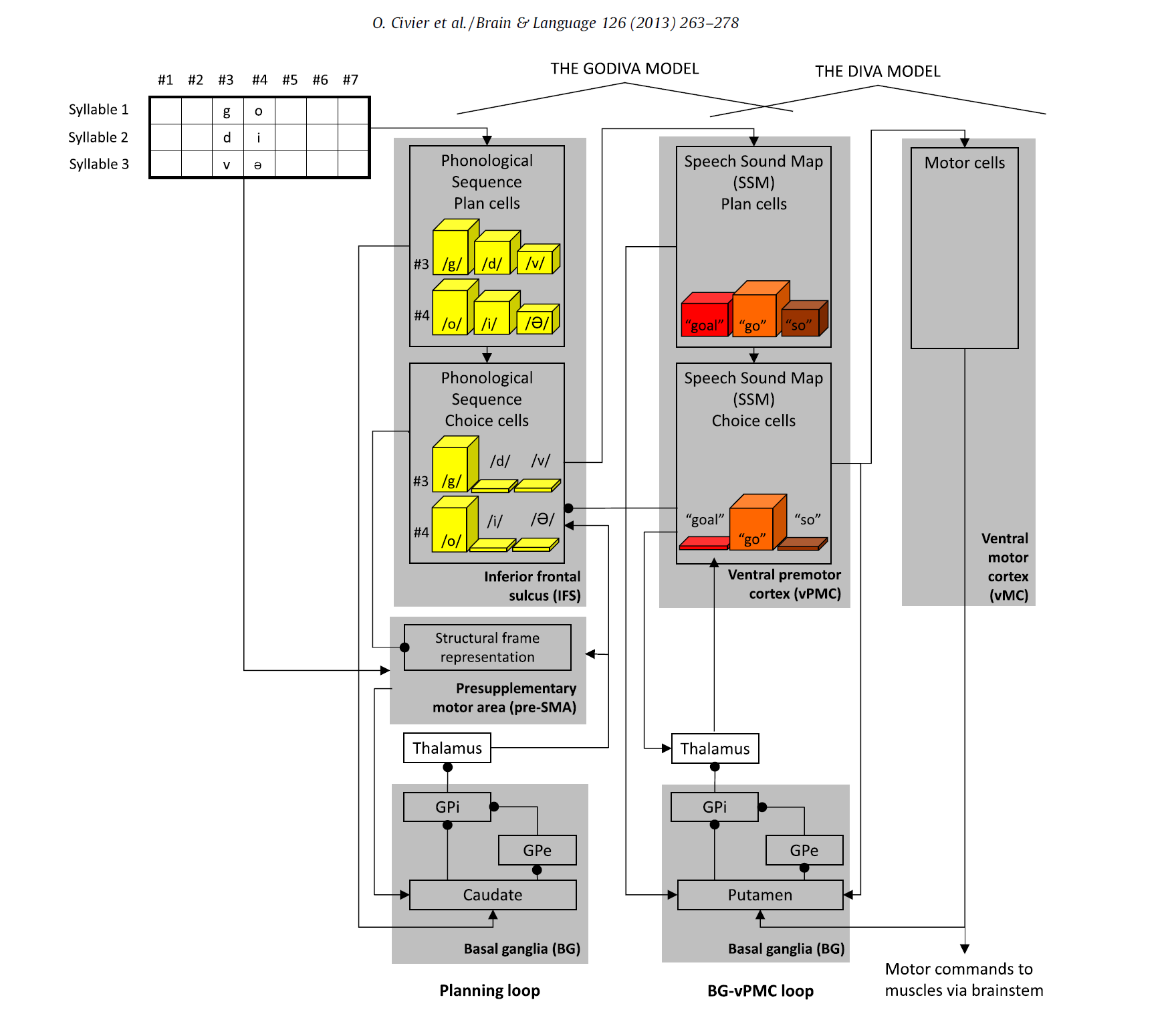
Ouvrir la publicationDOI: 10.1016/j.jfludis.2012.05.004Civier, O., Bullock, D., Max, L., & Guenther, F. H. (2013). Computational modeling of stuttering caused by impairments in a basal ganglia thalamo-cortical circuit involved in syllable selection and initiation.
Ouvrir la publicationDOI: 10.1016/j.bandl.2013.05.016Garcia-Barrera, M. A., & Davidow, J. H. (2015). Anticipation in stuttering: A theoretical model of the nature of stutter prediction.
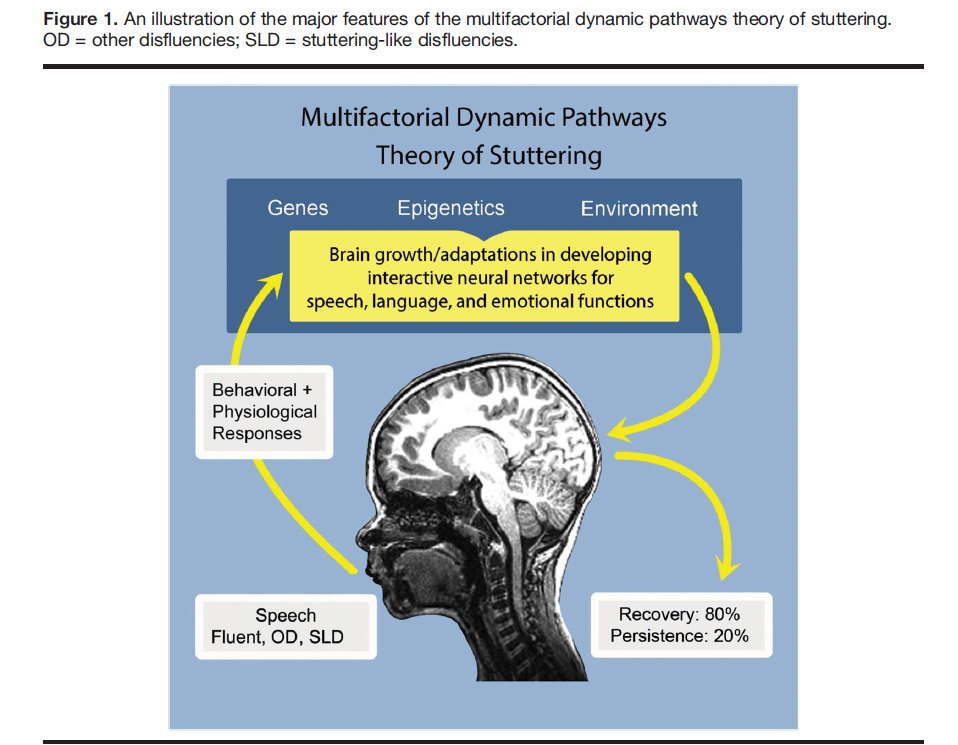
Ouvrir la publicationDOI: 10.1016/j.jfludis.2015.03.002Smith, A., & Weber, C. (2017). How Stuttering Develops: The Multifactorial Dynamic Pathways Theory.
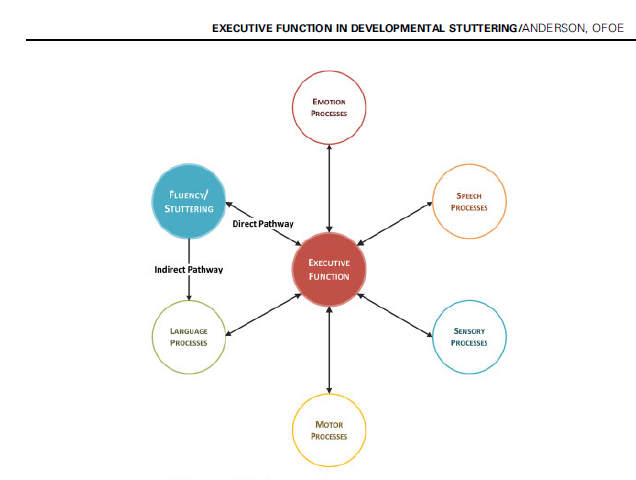
Ouvrir la publicationDOI: 10.1044/2017_JSLHR-S-16-0343Anderson, J. D., & Ofoe, L. C. (2019). The Role of Executive Function in Developmental Stuttering.
Ouvrir la publicationDOI: 10.1055/s-0039-1692965Chang, S.-E., & Guenther, F. H. (2020). Involvement of the Cortico-Basal Ganglia-Thalamocortical Loop in Developmental Stuttering.
Ouvrir la publicationDOI: 10.3389/fpsyg.2019.03088Usler, E. R. (2022). Why Stuttering Occurs: The Role of Cognitive Conflict and Control.
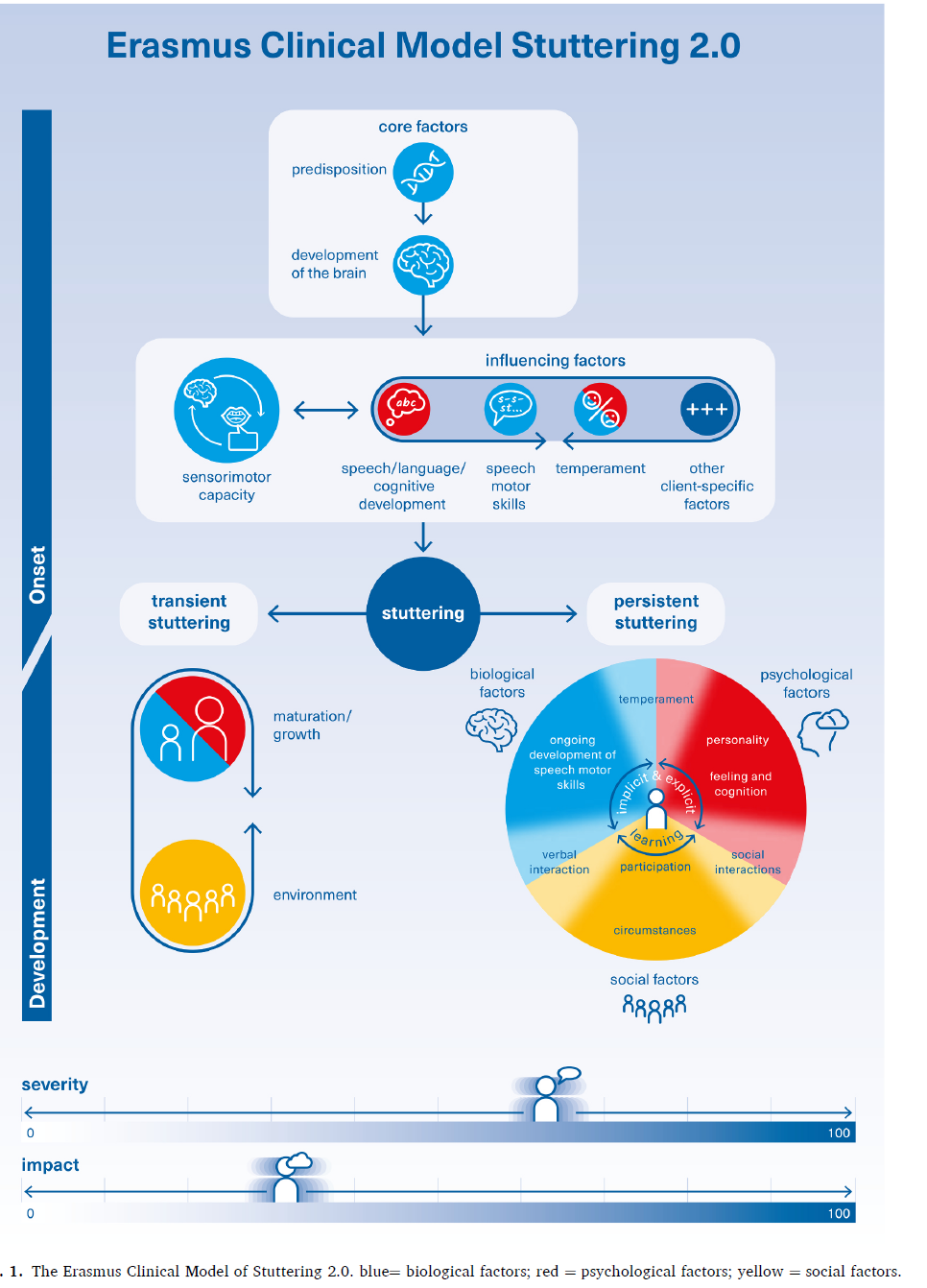
Ouvrir la publicationDOI: 10.1097/TLD.0000000000000275Franken, M.-C., Oonk, L. C., Bast, B. J. E. G., Bouwen, J., & De Nil, L. (2024). Erasmus clinical model of the onset and development of stuttering 2.0.
Ouvrir la publicationDOI: 10.1016/j.jfludis.2024.106040Usler, E. R. (2025). An active inference account of stuttering behavior.
Ouvrir la publicationDOI: 10.3389/fnhum.2025.1498423Bajaj, A. (2007). Working memory involvement in stuttering: Exploring the evidence and research implications.
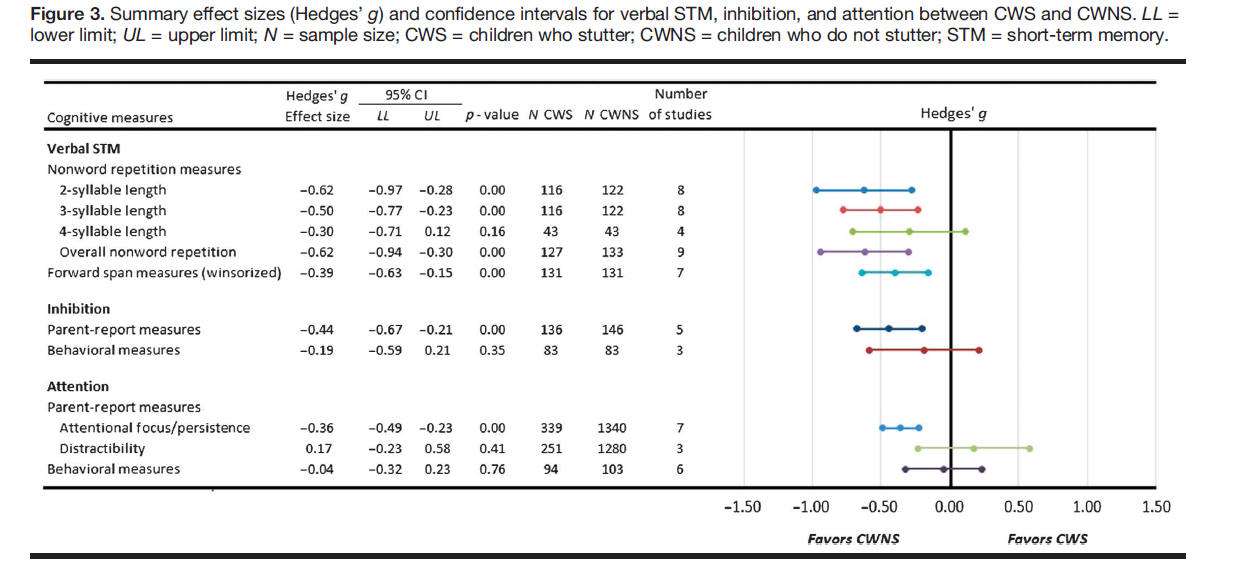
Ouvrir la publicationDOI: 10.1016/j.jfludis.2007.03.002Ofoe, L. C., Anderson, J. D., & Ntourou, K. (2018). Short-Term Memory, Inhibition, and Attention in Developmental Stuttering: A Meta-Analysis.
Ouvrir la publicationDOI: 10.1044/2018_JSLHR-S-17-0372Doneva, S. P. (2020; online 2019). Adult stuttering and attentional ability: A meta-analytic review.
Ouvrir la publicationDOI: 10.1080/17549507.2019.1665710Liu, Y., et al. (2024; online 2023). Brain response to errors in children who stutter.
Ouvrir la publicationDOI: 10.1016/j.jfludis.2023.106035Arnstein, D., Lakey, B., Compton, R. J., & Kleinow, J. (2011). Preverbal error-monitoring in stutterers and fluent speakers.
Ouvrir la publicationDOI: 10.1016/j.bandl.2010.12.005Chang, S.-E., et al. (2008). Brain anatomy differences in childhood stuttering.
Ouvrir la publicationDOI: 10.1016/j.neuroimage.2007.09.067Chang, S.-E., Zhu, D. C., Choo, A. L., & Angstadt, M. (2015). White matter neuroanatomical differences in young children who stutter.
Ouvrir la publicationDOI: 10.1093/brain/awu400Smith, A., & Weber, C. (2016). Childhood Stuttering: Where Are We and Where Are We Going?
Ouvrir la publicationDOI: 10.1055/s-0036-1587703Junuzović-Žunić, L., Sinanović, O., & Majić, B. (2021). Neurogenic Stuttering: Etiology, Symptomatology, and Treatment.
Ouvrir la publicationDOI: 10.5455/medarh.2021.75.456-461Ward, D. (2010). Sudden onset stuttering in an adult: Neurogenic and psychogenic perspectives.
Ouvrir la publicationReilly, S., et al. (2013). Natural history of stuttering to 4 years of age: A prospective community-based study.
Ouvrir la publicationDOI: 10.1542/peds.2012-3067Månsson, H. (2000). Childhood stuttering: Incidence and development.
Ouvrir la publication